The Complete Guide to Ceramic Coating for Connecticut Drivers
Ceramic coating is the longest-lasting paint protection you can get. Here's everything Connecticut drivers need to know before investing in one.
If you've spent any time researching car paint protection, you've probably come across ceramic coating. It's the gold standard for paint protection — and for drivers in Connecticut who deal with road salt, tree sap, UV exposure, and unpredictable weather, it's especially worth understanding. This guide covers what a coating actually is, how it compares to wax and sealant, and how to keep one performing for years.
What Is Ceramic Coating?
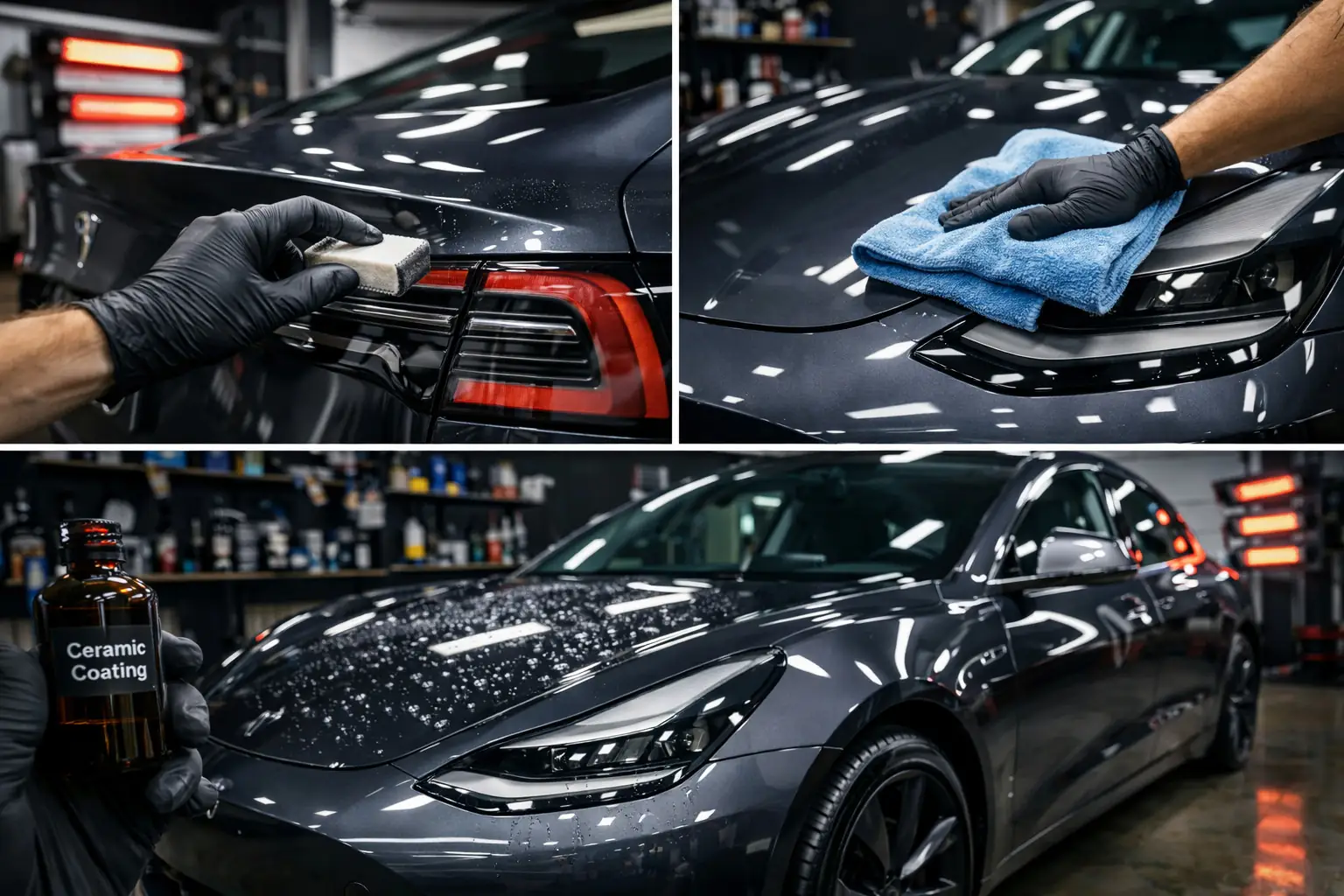
Ceramic coating is a liquid polymer applied by hand to your car's exterior surfaces. When it cures, it chemically bonds to the factory paint, creating a semi-permanent protective layer that's far harder and more durable than traditional wax or sealant.
Think of it as a second skin for your paint — one that's hydrophobic (repels water), UV-resistant, and chemically resistant to bird droppings, bug splatter, and road salt.
[Insert Image Description: Water beading tightly on a ceramic-coated dark blue hood after rain, droplets sitting high on the surface]
Wax vs. Sealant vs. Ceramic Coating
These three get lumped together constantly, but they're very different products. Here's how they compare for a car living through Connecticut's four seasons:
| Factor | Carnauba Wax | Synthetic Sealant | Ceramic Coating |
|---|---|---|---|
| Durability | 4–8 weeks | 3–6 months | 1–5+ years |
| Survives a CT salt season | No | Barely — one season | Yes, multiple seasons |
| UV protection | Minimal | Moderate | Strong |
| Chemical resistance (sap, bugs, bird droppings) | Low | Moderate | High |
| Relative cost | $ | $$ | $$$ upfront, lowest per year |
Why Connecticut Drivers Need It More Than Most
New England weather is uniquely punishing on vehicle paint. Over a single year in Enfield, your paint faces:
- Winter road salt: Accelerates oxidation and eats through clear coat. Ceramic coating provides a barrier between salt and paint.
- Spring pollen and tree sap: These acidic contaminants etch unprotected paint within days. Coated surfaces allow easy removal without damage.
- Summer UV: Connecticut's humid summers with direct sun exposure fade paint over time. Ceramic coating blocks UV penetration.
- Fall leaf tannins: Wet leaves left on paint leave stains. A coated surface resists tannin absorption.
- Freeze-thaw cycling: Repeated expansion and contraction stresses unprotected clear coat at chips and edges.
- Acid rain and road film: The I-91 corridor's traffic density means constant exposure to exhaust film and industrial fallout.
How Long Does Ceramic Coating Last?
At Shine Doctor, we offer ceramic coating packages ranging from 1–2 year entry-level coatings to 5+ year professional-grade options. Longevity depends on the product tier, your driving conditions, and how you maintain the coating. A coated car parked outside year-round in Somers will wear faster than a garaged weekend car in Longmeadow — but both will dramatically outlast any wax. Annual maintenance washes extend the coating's hydrophobic properties and keep it performing at peak levels.
What's the Application Process?
Proper ceramic coating application is a multi-step process:
- Thorough wash and decontamination — Every particle of dirt, iron, and tar must be removed.
- Paint correction — Swirl marks and scratches are polished out first, because the coating will lock in any existing imperfections.
- Panel-by-panel application — The coating is applied in thin, even layers and allowed to flash before buffing.
- Curing period — The vehicle must stay dry for 24–48 hours while the coating fully bonds to the paint.
[Insert Image Description: Detailer applying ceramic coating to a car door panel with an applicator block, working under bright LED inspection lighting]
Caring for a Coated Car
A ceramic coating isn't a force field — it needs sensible maintenance to hit its rated lifespan. Follow these rules and your coating will earn its keep:
- Wait two weeks after application before the first wash — the coating is still hardening
- Hand wash with pH-neutral soap; skip brush-style automatic washes entirely
- Don't apply wax over the coating — it adds nothing and can interfere with hydrophobics
- Rinse off road salt within a week or two during winter; the coating resists salt but shouldn't marinate in it
- Remove bird droppings and sap promptly — coatings resist etching, they don't make paint immune
- Book an annual inspection and decontamination wash to restore beading performance
- Avoid aggressive degreasers and acidic wheel cleaners near coated panels
Is It Worth the Investment?
A ceramic coating costs more upfront than a wax job, but consider what you're getting: years of protection versus weeks. Spread the cost across a 3–5 year coating lifespan and it's typically cheaper per year than a quarterly wax habit — while protecting better every single day. You'll spend less time washing (dirt releases easier from a coated surface), and your paint will hold its value significantly better at trade-in or resale.
Curious whether ceramic coating is right for your vehicle? Request a quote from Shine Doctor in Enfield, CT, or view our pricing for all coating tiers. Call (860) 741-2270 with any questions.
Ready to book?