How to Remove Road Salt Damage from Your Car in Connecticut
Connecticut winters dump thousands of tons of road salt every season. Here's how it damages your vehicle and what professional detailing can do to stop it.

Every winter, the Connecticut Department of Transportation spreads roughly 200,000 tons of road salt across state highways and local roads. Towns along the I-91 corridor — including Enfield, Windsor Locks, and Springfield — see some of the heaviest application in the region. If you commute down I-91 to Hartford or cross the Route 190 bridge into Suffield every morning, your rocker panels are getting a salt bath five days a week. That white film clinging to your fenders and wheel wells isn't just ugly; it's actively corroding your vehicle.
[Insert Image Description: Close-up of white road salt residue caked on a dark-colored sedan's lower door panel and rocker trim, photographed in an Enfield driveway in February]
How Road Salt Damages Your Vehicle
Road salt (sodium chloride) accelerates oxidation — the chemical process behind rust. And here's the part most drivers miss: salt does its worst work when temperatures hover just above freezing, which describes most of a Connecticut January thaw. Melted brine seeps into seams and crevices, then sits there. Salt attacks your car from multiple angles:
- Paint and clear coat: Salt crystals create micro-scratches that break the paint's protective barrier, exposing bare metal to moisture.
- Undercarriage: Brake lines, exhaust systems, and suspension components sit in the splash zone where salty water pools and lingers.
- Wheel wells and trim: Road spray concentrates here, causing premature fading and corrosion of plastic and rubber components.
- Door sills and rocker panels: These low-mounted panels trap salt-laden moisture, making them rust hotspots.
- Brake and fuel lines: On vehicles more than 6–7 years old, corroded lines are one of the most common — and most dangerous — failures we hear about from customers.
- Door hinges and latches: Brine wicks into moving hardware and dries into a gritty paste that wears components prematurely.
Why a Quick Rinse Isn't Enough
Drive-through car washes remove surface grime, but they can't reach the areas where salt does the most damage — inside wheel wells, under the chassis, and within door jamb seams. A thorough rinse also won't remove the bonded salt deposits that have already started reacting with your paint. Here's how the common options actually stack up:
| Method | Surface Salt Film | Undercarriage & Wheel Wells | Bonded Salt Deposits |
|---|---|---|---|
| Drive-through car wash | Mostly removed | Basic spray at best | Not removed |
| DIY driveway rinse | Partially removed | Rarely reached | Not removed |
| Self-serve wand wash | Removed | Partial, if you crouch and aim | Not removed |
| Professional post-winter detail | Fully removed | Dedicated flush | Removed via clay bar |
What You Can Do Between Washes
You don't need professional equipment to slow salt damage during the season. These habits make a measurable difference for Enfield-area drivers:
- Rinse your wheel wells and lower panels every 2–3 weeks during active salt season — even a January thaw day above 40°F works.
- Skip washing when temperatures will drop below freezing overnight; trapped water refreezes in seams and door seals.
- Avoid following plow trucks and salt spreaders closely on I-91 and Route 5 — fresh brine spray is the most corrosive.
- Keep floor mats rubber in winter; carpet mats hold salt-saturated slush against the floor pan.
- Hose out the gap behind your mud flaps, where sand and salt pack in like concrete.
- Touch up paint chips before December — exposed metal plus salt equals rust by spring.
- If you park in a heated garage, rinse first; warm air accelerates the corrosion chemistry dramatically.
Professional Post-Winter Detailing: What We Do
At Shine Doctor in Enfield, CT, our post-winter detail includes targeted salt remediation:
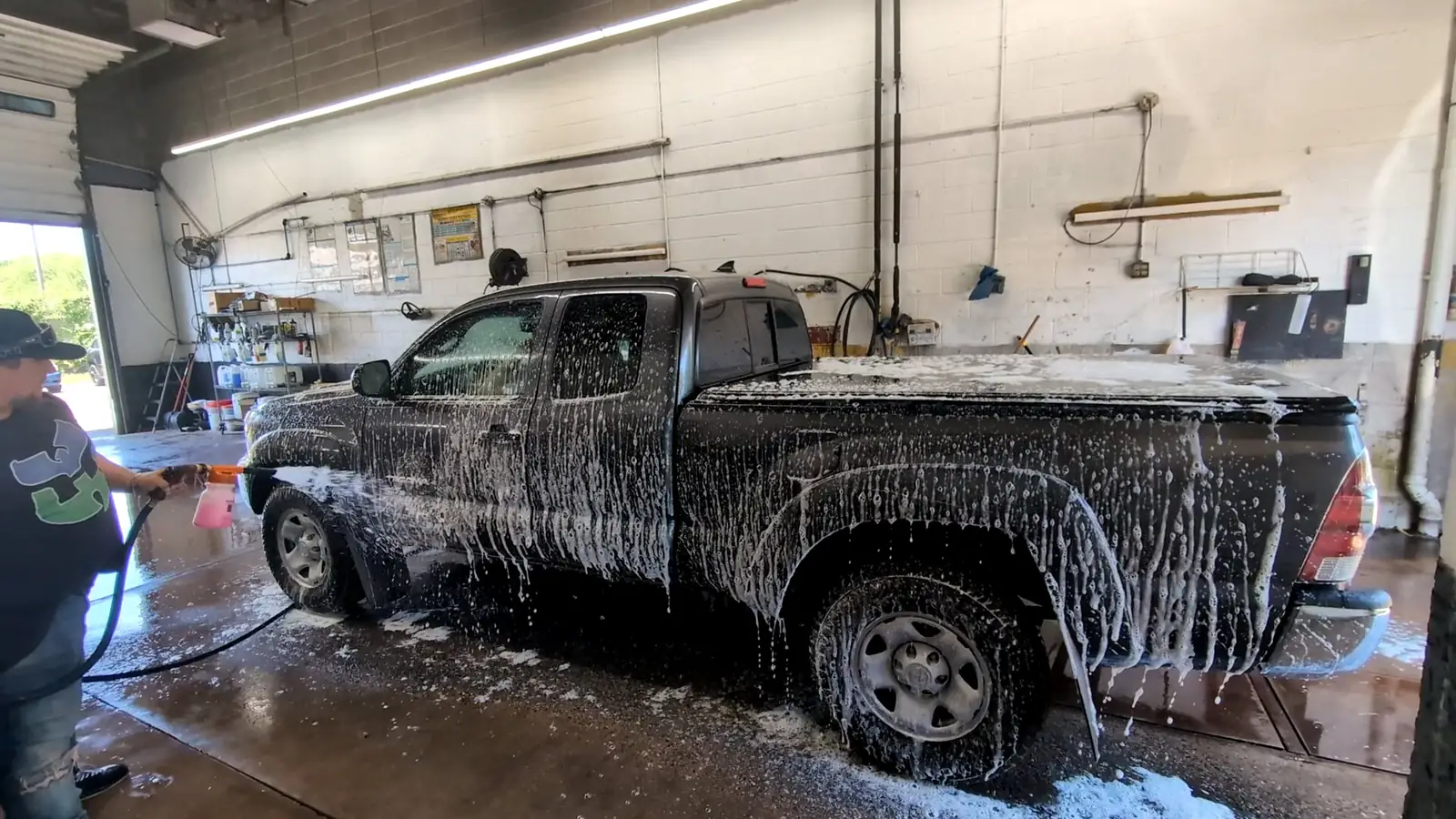
- Foam pre-soak and pressure wash — We use a pH-neutral snow foam to break down bonded salt before it's agitated, preventing micro-scratching during the wash.
- Undercarriage flush — A dedicated undercarriage spray removes salt from brake components, suspension arms, and frame rails.
- Clay bar decontamination — After washing, a clay bar treatment pulls embedded salt crystals from the paint surface that washing alone can't remove.
- Paint sealant or ceramic coating — A protective layer seals the clean surface and creates a hydrophobic barrier for the next salt season.
[Insert Image Description: Detailer performing an undercarriage flush on a lifted SUV, water and salt residue visibly rinsing off suspension components]
When to Schedule Your Post-Salt Detail
The ideal window is mid-March through April, once overnight temperatures consistently stay above freezing and the last salt trucks have rolled. Waiting too long lets the damage compound — by June, surface corrosion may require paint correction to fix.
Warning Signs Salt Damage Has Already Started
Check these spots on your own vehicle this spring. If you spot any of the following, don't wait:
- Orange or brown speckling along the bottom edges of doors and the tailgate
- Paint bubbling near wheel arches — rust is spreading under the paint
- A white, chalky haze on lower panels that returns within days of washing
- Crusty white buildup on brake calipers or suspension springs
- Door hinges that squeak or feel gritty when opening
- Carpet or trunk liner that smells damp — brine may have breached a seam seal
Protect Your Investment This Season
If you're in Enfield, Somers, East Windsor, or anywhere in the greater Hartford area, schedule your post-winter detail before salt damage becomes permanent. Have questions? Contact Shine Doctor or call us at (860) 741-2270.
Ready to book?